Cold showers have a way of turning “what size hot water cylinder do I need” into the most urgent question in the house. Get it wrong, and you either run out mid-shower or pay to heat water you’ll never use. This blog covers our hot water cylinder size guide for Wellington households, how sizing changes across electric, gas storage and heat pump systems, and the local factors that can override the textbook answer.
Our Hot Water Cylinder Size Guide for Wellington Homes
Sizing comes down to household size, number of bathrooms, and whether hot water gets drawn all at once or spread across the day.
These figures are general guidance, not a spec to order from. Cupboard space, pipework and your household’s actual habits can all shift the right size up or down, so treat the table as a starting point. Our hot water cylinder services team can confirm the right size for your home before you buy.
| Household size | Bathrooms | Typical usage pattern | Electric | Gas storage | Heat pump |
| 1 to 2 people | 1 | Showers only, staggered | 135L | 135L | 180L |
| 2 to 4 people | 1 | Standard family use | 180L | 180L | 250L |
| 4 to 6 people | 2 | Baths plus overlapping showers | 250L | 250L | 300L |
| 6 or more people | 2 or more | Heavy, simultaneous demand | 300L+ | 300L+ | 300L to 360L |
Notice the heat pump column runs bigger at every level. A heat pump heats water gradually by pulling warmth from the air, rather than delivering the near-instant blast of an electric element. That slower recovery means it needs a larger buffer to cover the same household comfortably.
The Wellington Constraints That Override the Ideal Size
The table above assumes an average NZ household. Wellington conditions may cause variation due to the harsher climate and older houses.
- Small hot water cupboards: Many villas and bungalows around the city were built around a modest airing cupboard, not a 300 litre tank. Sizing up sometimes means reworking the space first.
- Low pressure legacy systems: Older setups still turn up across Wellington, Lower Hutt, Upper Hutt and Porirua. Moving to mains pressure changes what fits, so the ideal size on paper may need a pipework upgrade too.
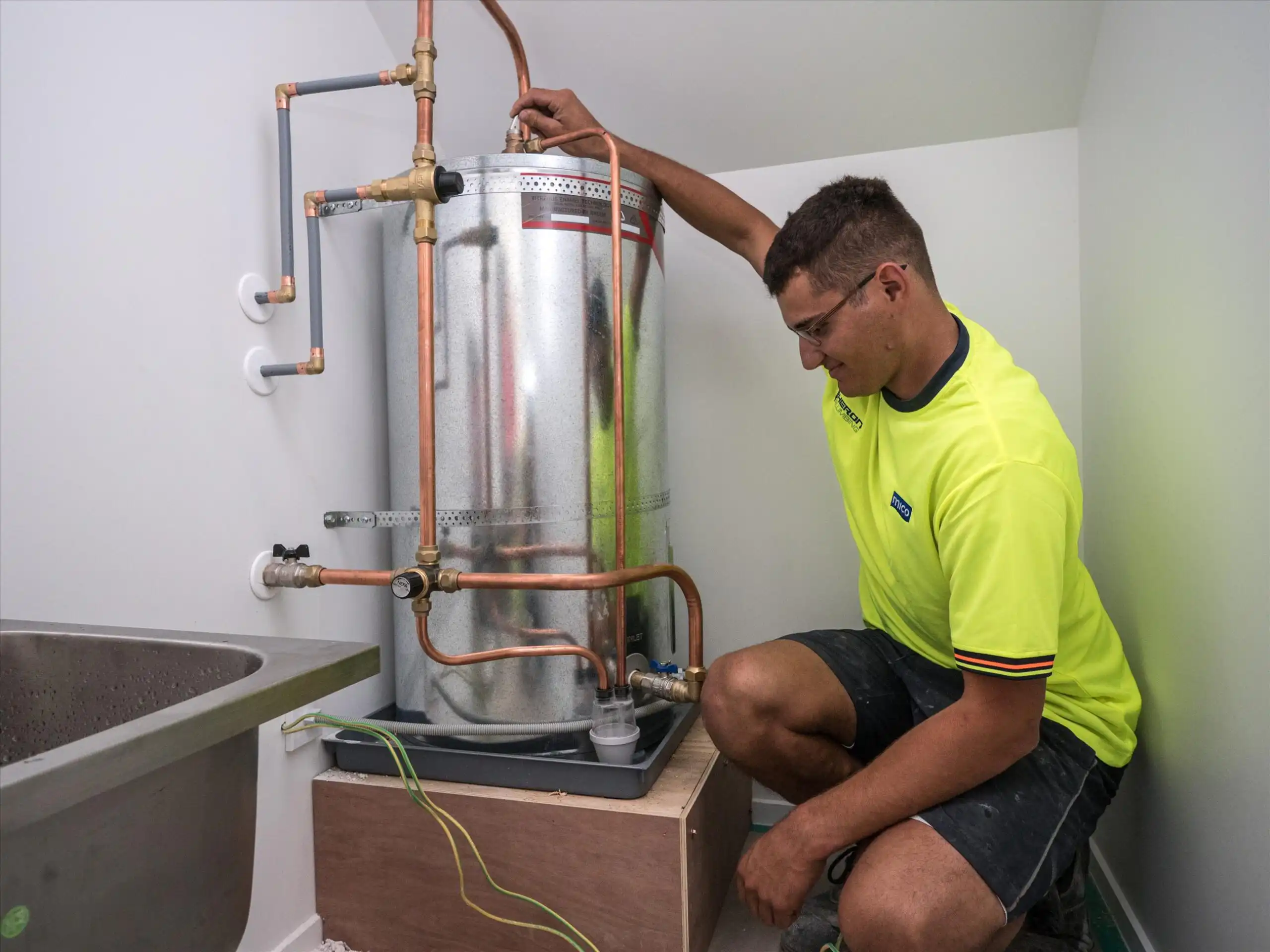
- Seismic restraint requirements: Every storage water heater in New Zealand must be strapped under the Building Code.
- Steep or narrow sections: Heat pump units need a ventilated outdoor spot, and some hillside properties don’t have a sensible one without a long, efficiency-sapping pipe run.
Sizing By Cylinder Type
Electric cylinders are the most common and easiest to size, with predictable output and no gas connection required.
Gas storage systems recover faster than electric, so they can occasionally sit a size smaller for the same household, provided your street has a gas connection.
Heat pump systems need the largest tank of the three, plus outdoor space for the unit, but they’re usually the cheapest to run day to day.
Solar systems, which we also install, generally size close to an equivalent electric tank, with panels covering sunnier Wellington days and a standard element backing up the rest.
Not sure which type suits your home? Our hot water cylinder services team can talk you through the trade-offs for your property.
Hot Water Cylinder Sizing FAQs
What size hot water cylinder do most Wellington households need?
Can I upsize my cylinder if my family grows?
Is a heat pump hot water cylinder worth it for a Wellington home?
Can I install or resize a hot water cylinder myself?
How do I know if my current cylinder is the wrong size?
Get the Right Size, First Time
Guides and tables get you close, but the only way to know for certain is to have someone measure your home, your usage and your pipework.
Get in touch with Harbour City Plumbing for a straightforward, no-pressure assessment, and we’ll help you land on the size that suits your household rather than the average one on a spec sheet.